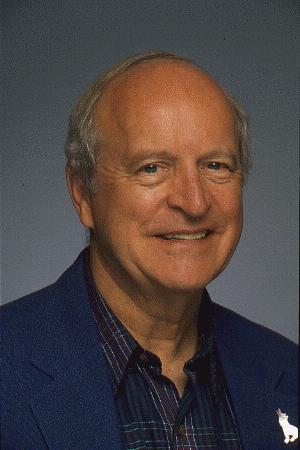
In the past decade, Santa Fe's ship has come in. And Wally Sargent, owner of Santa Fe Properties, has stood on the Plaza and met the boat. In a very real sense, he is Mr. Santa Fe, for his personal history mirrors that of his hometown.
Wally Sargent is a fourth generation Santa Fean. Both of his grandfathers were mayors of Santa Fe. His godfather was football coach Brady Magers, for whom Magers Field north of the Plaza is named. His tiny, indomitable mother, known affectionately to generations of students as 'Shorty', has been called "the Matriarch of Miller Street". Her mother, Wally's grandmother Myrtle Andrews published numerous short stories in New Mexico Magazine and other periodicals, and wrote a book called Red Chile. If a town as laid-back and egalitarian as Santa Fe could have a dynasty, the Sargents would be it.
"Santa Fe was so different when I was growing up," Wally reminisces. "I loved living here. It was a small town, even though it was already attracting a lot of tourists. There was only one art gallery, Dwight Roberts' Kachina Gallery across from La Fonda. There were a lot of painters, though -- Sheldon Parsons and the Cinco Pintores (Jozef Bakos, Fremont Ellis, Will Shuster, Willard Nash and Walter Mruk)."Everybody knew everybody. Live centered around the core area downtown. The Plaza was for locals, and we all hung out at Zook's and Capital Pharmacy.
"Santa Fe High School (where Shorty had been the girls' basketball coach when she was just out of college) was downtown, a block north of the Plaza, and our cross-town rival was St. Michael's High School just a few blocks south where the PERA Building (across from the round capitol building) is now."
During his teen years, he had a dance band called Wally Sargent and His Major Keys. He played piano, and Sam Pick, the former mayor of Santa Fe, was one of the saxophone players. On Friday and Saturday nights, they would play for high school dances and for night clubs, private functions at La Fonda, and other special events. They made $10 each per night, which was enough in those days to enable the boys to have cars.